Applicant Tracking Systems (ATS) are software tools that scan resumes for relevant keywords (skills, job titles, tools, certifications, etc.) and filter out resumes that don’t match a job description. For QA Tester candidates, this means your resume must use the right ATS keywords and a simple format so the software “sees” your qualifications. Research shows 88% of hiring systems reject resumes that don’t precisely match the description.
In practice, you should tailor each resume to the job posting: identify keywords in the posting and use them naturally in your summary, skills section, and experience bullets. For example, include exact phrases like “Selenium,” “API Testing,” or “Regression Testing” if the job requires them, rather than using synonyms. Use clear section headings (e.g. Work Experience, Skills) and bullet points rather than graphics or tables, since ATS software reads plain text more reliably.
Key strategy: Follow these steps to make keywords work for you:
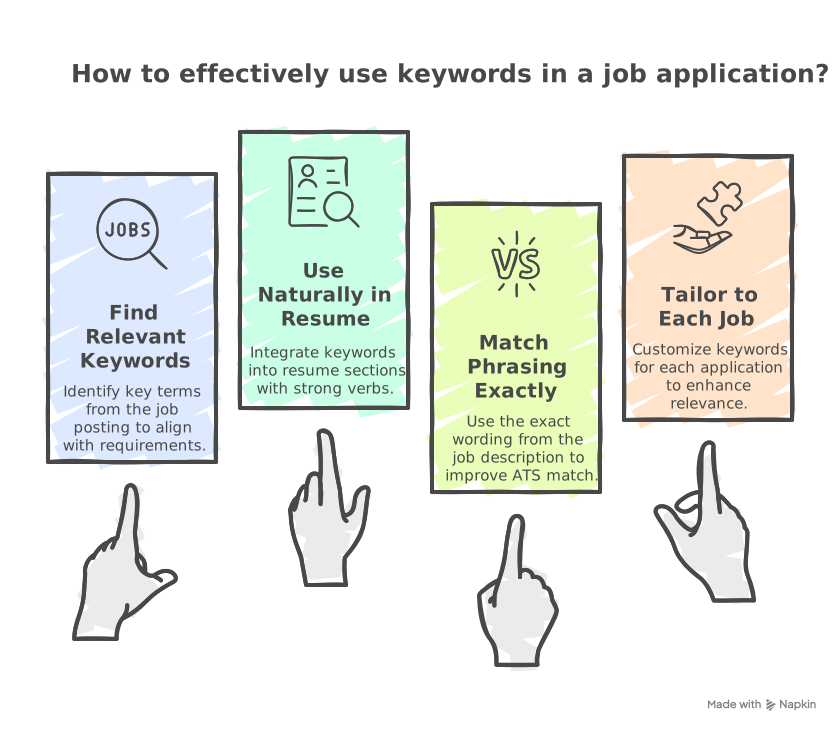
- Find relevant keywords. Scan the QA job posting for repeated tools, technologies, and skills (e.g. “Selenium”, “Postman”, “JIRA”, “Agile”, “Test Automation”).
- Use them naturally. Put those exact terms into your resume’s summary, skills list, and experience bullets. Avoid random stuffing—phrase them in context with strong verbs (e.g. “tested”, “developed”, “executed”).
- Match phrasing exactly. If the description says “automated test scripts”, use that wording rather than “test scripts automation” (ATS may not recognise synonyms).
- Tailor to each job. Change your keywords for each application to match the company’s posted requirements, improving your ATS “match” score.
Top QA Tester Skills and ATS Keywords
Successful QA tester resumes highlight both technical (hard) skills and soft skills. Industry analyses of QA roles show common keywords to include. For example, ZipRecruiter reports that QA resumes typically feature terms like “Quality Assurance,” “Test Automation,” “Troubleshooting,” “Selenium,” “Database,” “SQL,” “JIRA,” and “Manual Testing” prominently. Enhancv’s guide for 2025 lists the top hard skills for QA testers, including Selenium, JIRA, Postman, TestRail, Cucumber, Bugzilla, SQL, Java, Python, SOAPUI, Jenkins, JMeter, Appium and more. Soft skills are also important: resumes should show you are detail-oriented, a strong communicator, and a good collaborator.
Key ATS-friendly keywords and skills for QA testers include (but are not limited to):
- Quality Assurance (QA) – Phrased as “Quality Assurance” or “QA,” since recruiters often search by this exact term.
- Test Automation – Include specific frameworks like “Selenium WebDriver,” “Jenkins,” “JUnit/TestNG,” “Cucumber” (for BDD), “Appium” (for mobile), etc..
- Manual Testing Skills – Terms like “Manual Testing,” “Test Case Design,” User Acceptance Testing (UAT), Functional Testing, and Regression Testing. These are fundamental QA tasks. For example, bullet points can mention “functional testing” or “regression testing” explicitly. (Note: some analyses suggest not to over-emphasize generic terms like UAT on a resume, but including them when they match the job is still useful.)
- API Testing – Tools and terms such as “API Testing”, “Postman”, “RESTful Services”, or “REST Assured”. For instance, if you have experience testing backend APIs, mention “API testing with Postman” or “validated JSON responses in REST API tests.”
- Defect/Bug Tracking – Include “JIRA,” “Bugzilla,” or other tracker names, as well as phrases like “bug tracking,” “issue reporting,” “defect resolution.”
- Programming/Query Languages – e.g. Java, Python, C#, SQL. If you write automation scripts, mention the language. Also include database skills like “SQL database testing”, “PL/SQL” or “data validation using SQL”.
- Tools and Environments – Mention any relevant software (e.g. “Git,” “Docker,” “JMeter,” “LoadRunner,” “Quality Center/HP ALM,” “TestRail”), operating systems (e.g. Windows, Linux), and methodologies (“Agile,” “Scrum,” “TDD/BDD,” “CI/CD”).
- Soft Skills / Other Terms – The resume should also reflect traits such as “Detail-Oriented,” “Collaboration,” “Communication Skills,” and “Problem-Solving,” as these often appear in QA job descriptions.
In summary, an ATS-friendly skills section might list bullet points or a simple comma-separated list like:
Automation Tools: Selenium, Appium, JUnit, TestNG, Jenkins, Cucumber, Postman, JMeter

Bug Tracking: JIRA, Bugzilla, Azure DevOps

Programming: Java, Python, SQL

QA Methods: Manual Testing, Regression Testing, Functional Testing, Performance Testing

Processes: Agile (Scrum), SDLC, CI/CD

Soft Skills: Detail-Oriented, Collaboration, Problem-Solving
Each term here would match typical ATS search terms for QA roles.
Manual QA Tester Resume: Keywords & Skills
For manual QA tester roles, emphasise hands-on testing skills and processes. Important keywords include “Manual Testing”, “Test Case Creation”, “Test Execution”, “Functional Testing”, “Regression Testing”, “User Acceptance Testing”, “Black-Box Testing”, “White-Box Testing”, and “Test Planning”. Also list any relevant documentation or domain skills like “Test Plans,” “Test Reports,” or “Quality Standards (ISO 9001, Six Sigma).” Mention experience with defect tracking tools (JIRA, Bugzilla, etc.) and communication with development teams. If you have no prior QA job title, highlight academic projects or internships using these terms (e.g. “Performed manual test case execution for a web application using Agile process”).
Example: In a job bullet, you might write: “Executed manual functional and regression tests on new software releases, identifying and documenting 100+ bugs using JIRA.” This sentence explicitly contains ATS keywords “manual,” “functional testing,” “regression testing,” and “JIRA.”
Skills section example for manual QA:
Manual Testing • Functional Testing • Regression Testing • UAT • Test Case Design • Bug Reporting • Agile/Scrum • JIRA • Bugzilla
Automation QA Tester Resume: Keywords & Skills
Automation QA testers should list their programming and automation expertise. Key terms include “Test Automation”, “Automated Test Scripts”, “Selenium WebDriver”, “Appium”, “Cucumber/BDD”, “JUnit/TestNG/NUnit”, “REST Assured”, “SOAPUI”, “CI/CD Pipelines”, and any automation frameworks you’ve built. Also include relevant languages (e.g. Java, Python, C#) and tools (e.g. Jenkins, Git, Docker). For example, instead of saying “created tests,” use “developed automated test scripts using Selenium WebDriver in Java” or “implemented a Jenkins CI pipeline for automated testing”. Mentioning metrics (coverage increased by X%, reduced testing time by Y%) can be powerful and still includes ATS keywords.
Automation skills section example:
Automation Tools: Selenium WebDriver, Appium, JMeter, SOAPUI, Postman, Cucumber, Jenkins, Git
Programming: Java, Python, C#
Methodologies: Agile, TDD/BDD, CI/CD
Any framework names (e.g. Robot Framework, Protractor) and certifications (e.g. ISTQB, Selenium Certification) should also be included if you have them. ResumeWorded specifically recommends a “clear skills section” listing these tools to help ATS filtering.
Entry-Level QA Tester Resume: Keywords & Tips
If you’re entry-level (new graduate or switching fields), focus on your education, projects, and any internships while still using ATS keywords. List your degree (Computer Science, Software Engineering, IT, etc.) and relevant coursework like Software Testing, Programming, Databases. Include certifications such as ISTQB Certified Tester (CTFL) or any online course (e.g. “Certified Selenium Tester”). Mention class projects or capstone experiences in QA: e.g. “Developed a Java-based test suite for a university project.” Use phrases like “quality assurance”, “software testing principles”, “basic test case development”, and tool experience (even if academic, e.g. “Git”, “JUnit”). Include general skills like “Attention to Detail” or “Strong Communication” as well.
Entry-level resume tip: Write a concise objective or summary that includes ATS keywords. For instance: “Computer Science graduate seeking QA Tester position. Skills: software testing, Selenium, JIRA, SQL, and agile methodologies.” This uses key terms right up front. Also ensure your resume is formatted simply (see next section) so ATS can parse even a short work history or project list.
ATS-Friendly Resume Format for QA Jobs
Formatting is as important as the keywords themselves. Indeed (2025) advises that an ATS resume “must be easy for software to scan with simple formatting”. Use a clean, chronological, or hybrid template: contact info at top (name, phone, email, LinkedIn), followed by a brief professional summary or objective, a Skills section, then Experience and Education. Keep design minimal: avoid images, graphics, tables, or unusual fonts (stick to Arial, Calibri, Times New Roman). Label each section with common headings (“Work Experience,” “Skills,” etc.) because ATS looks for these labels.
In your Skills section, you can use bullets or columns to list keywords as shown above. In the Experience section, use short bullet points (3–5 lines each) under each job. Each bullet should start with an action verb (e.g. “Designed”, “Conducted”, “Automated”) and include metrics if possible. For example:
- Correct: “Automated 50+ regression test cases with Selenium, reducing manual testing effort by 30%.”
- Too generic: “Responsible for doing manual testing.”
ATS systems favor straightforward resumes. For example, clear headings and bullet lists help the software pick up keywords. As ResumeWorded notes, matching the skills in the job description and listing them in the skills section makes you “a better fit to ATS filters”. Finally, proofread carefully: ATS may penalize misspellings.
Example QA Tester Resume Snippet (ATS-Friendly)
The sample QA tester resume above illustrates an ATS-optimized layout. It highlights critical skills – for example, listing keywords such as Regression Testing, Bug Tracking, Selenium, JIRA, and SQL – all of which match common QA/tester keywords identified by industry analyses. The experience bullets use quantifiable results (e.g. “Conducted regression testing… improving code quality by 25%”) to integrate these terms naturally. This clear format with keyword-rich content helps ensure the resume passes ATS filters.
Sample Resume Bullets with ATS Keywords
Below are example resume bullet points (for the Experience section) that demonstrate how to incorporate ATS keywords:
- Conducted regression and functional testing on web applications, improving software stability and reducing post-release defects by 25%.
- Designed and executed API tests using Postman, validating backend services and catching critical bugs before production.
- Automated test scripts with Selenium WebDriver (Java), increasing test coverage and cutting regression testing time by 40%.
- Performed mobile application testing on Android and iOS using Appium, identifying UI/UX issues and ensuring cross-platform compatibility.
- Executed SQL database testing (wrote complex queries and data validation scripts) to verify data integrity after system updates.
Each example above contains specific ATS-friendly keywords (in bold here for emphasis) and clear action verbs. You can adapt these to your own experience by plugging in the right tools, percentages, and details.
Key Takeaways
- Tailor your resume. Always customise your QA tester resume to the job. Pull keywords directly from the posting. ATS prioritises exact matches to the job description.
- Highlight both manual and automation skills. If you have both, make sure your resume mentions manual testing (e.g. “test case design”, “regression testing”) and automation skills (e.g. “Selenium”, “API testing”). Recruiters look for candidates who understand the full QA lifecycle.
- Use an ATS-friendly format. Stick to a clean, text-based template with standard section headings. Put your keywords in a dedicated Skills section and sprinkle them through your experience bullets. Avoid images, graphs, or unusual layouts.
- Include measurable results. Whenever possible, quantify your accomplishments (e.g. “Reduced bugs by 30%” or “Increased test coverage by 50%”). This not only makes your resume stand out to hiring managers, but ATS will still pick up the surrounding keywords and verbs.
- Example summary or objective: For instance: “Detail-oriented QA Tester with 3+ years in manual and automated testing. Proficient in Selenium, JIRA, and SQL. Skilled in regression testing and API testing to ensure quality releases.” This short paragraph includes ATS terms and shows focus.
By following these guidelines – using a clear format and weaving in the right ATS keywords (like Selenium, Postman, regression testing, etc.) – your QA Tester resume will be both readable to hiring managers and optimised for the resume scanners that many Tier-1 companies use.
Sources: Industry and resume experts emphasise matching your QA skills to the job description (Jobscan, ResumeWorded) and highlight common QA keywords to include. These best practices will keep your resume ATS-compliant and competitive in 2025 and beyond.
1. What are the best ATS keywords for a QA tester resume in 2025?
Answer:
The best ATS keywords for a QA tester resume in 2025 include manual testing, regression testing, automation with Selenium, API testing using Postman, SQL database validation, JIRA, Agile methodology, and test automation frameworks like TestNG, JUnit, and Cucumber. Use these ATS resume keywords naturally throughout your summary, skills, and experience sections to improve your chances of passing ATS filters.
2. How do I write an ATS-compliant resume for a manual QA tester role?
Answer:
To write an ATS-compliant manual QA tester resume, use a clean format with no tables or graphics, standard fonts like Arial or Calibri, and clear section headers. Highlight key skills such as manual testing, test case design, functional testing, and bug reporting using JIRA. Mention hands-on experience and tools with proper keywords like UAT, regression testing, and test documentation.
3. What automation QA tester resume keywords are most effective for ATS?
Answer:
The most effective automation QA tester resume keywords for ATS include automated test scripts using Selenium, API automation with REST Assured, CI/CD with Jenkins, BDD with Cucumber, and programming languages like Java or Python. Also include terms like test automation framework, Appium for mobile testing, and Git for version control to match common ATS filters.
4. What long-tail keywords should entry-level QA testers use in their resume?
Answer:
Entry-level QA testers should focus on long-tail keywords such as “entry level QA tester resume with manual and automation skills”, “basic SQL database testing”, “API testing using Postman”, and “test case execution in Agile environment.” Highlight internships, certifications like ISTQB, and academic projects to naturally include keywords like manual testing, JIRA, and Selenium basics.
5. Is there an ATS resume format for software quality assurance jobs?
Answer:
Yes, an ATS resume format for software quality assurance jobs should use a simple reverse-chronological or hybrid layout. Avoid tables or images. Use keyword-optimized sections like Professional Summary, Skills, Work Experience, and Certifications. Include keywords such as quality assurance, test automation, regression testing, and SQL testing. Make sure all content is in plain text and easy to scan for ATS software.