Learning how to start freelancing in 2026 is easier than most beginners think, and harder than most YouTube videos make it sound. The real path sits somewhere in between: a clear sequence of steps, realistic timelines, and an honest picture of what the first 90 days actually look like.
83% of millennials and Gen Z workers want to freelance at some point. The global freelance economy is worth $1.5 trillion annually, with 46.6% of the global workforce now freelancing or gigging part-time. By 2027, experts predict 86.5 million Americans will be freelancers, more than half the total U.S. workforce.
So what exactly is freelancing?
Freelancing is working independently by offering services to multiple clients on a project or hourly basis instead of being employed by a single company. You choose who you work with, what you charge, and when you work without being tied to one employer.
But here’s what stops most people cold: How to start freelancing? How do I find clients? What should I charge? What if I fail?
This guide answers every question beginners ask. In the next 30 minutes, you’ll learn the exact roadmap I used to go from zero experience to landing my first client in 14 days and scaling to $3,500/month within 6 months. More importantly, you’ll discover how to skip the mistakes that cost me 3 months and $2,000 in lost opportunity.
TL;DR: Freelancing in 2026 starts with one decision, picking a single skill you can offer within 30 days. From there: build 2-3 portfolio samples, set up a profile on Fiverr or Upwork, send 20 targeted proposals in your first week, and focus your first 5 projects entirely on earning reviews rather than maximizing income. Most beginners land their first client within 14 days when they follow this sequence. This guide covers every step with templates, real income benchmarks, and a 30-day action plan.
Here’s exactly what we’ll cover:
- What freelancing actually is (and why 2026 is the best time to start)
- How to identify YOUR freelancing niche (even if you’re stuck)
- Choosing between Fiverr, Upwork, and other platforms
- Writing your first proposal that actually wins clients
- Setting competitive rates that clients respect
- Landing your first 10 clients (the fastest path to income)
- Common mistakes that kill beginner freelancers
- Your 30-day action plan
Let’s dive in.
What Is Freelancing and Why Now Is the Perfect Time to Start

Freelancing is simple: You’re an independent contractor who offers services to multiple clients on a project or hourly basis. Unlike employees, you control your schedule, rates, and workload.
New to freelancing? First, understand what freelancing means with real-life examples before getting started.
But freelancing isn’t just about flexibility. Here’s what the data shows:
60% of freelancers make more money than they did in traditional jobs. Full-time freelancers earn a median income of $85,000 annually, exceeding many traditional roles. The top 25% of Gen Z side hustlers earn an average of $825 per month.
5 Reasons Why You Should Start Freelancing in 2026
1. Economic Security Through Diversification
Relying on one employer is risky. One layoff ends everything. Freelancers work with 3-5 clients simultaneously, so losing one client means 20-30% income loss—not 100%.
2. Unlimited Earning Potential
In a traditional job, you’re capped by your salary. $60,000/year? That’s your ceiling. Freelancers have no ceiling. You earn more by raising rates or taking on more clients. Experienced freelancers charge $50-150+/hour depending on skill.
3. Complete Schedule Flexibility
Work when you want, where you want. Some days you work 12 hours. Some days you take off. No manager tracking your hours. No commute. No dress code. That flexibility is why 70% of freelancers say they chose freelancing for improved work-life balance.
4. Location Independence
Work from your bedroom, a coffee shop, while traveling, or anywhere with internet. I’ve worked from coffee shops in 12 countries. Location doesn’t matter; results do.
5. Skill Development That Increases Your Market Value
As a freelancer, you learn: sales (how to land clients), marketing (how to stand out), negotiation (pricing), communication, time management, and financial management. These skills make you more valuable forever. These skills make you more valuable forever, whether you stay freelancing or return to traditional employment. Still deciding? Read our freelance vs full-time job comparison to make the right call for your situation.
The best time to start was yesterday. The second-best time is today. Let’s make today your start date.
How to Start Freelancing With No Experience in 2026
Starting freelancing with no experience can feel intimidating. You might think, “Why would anyone hire me if I’ve never worked with a client before?”
Here’s the truth: Every successful freelancer started with zero experience. What matters isn’t experience it’s positioning, proof, and execution.
Follow this step-by-step plan to get your first client even if you’ve never freelanced before.
Step 1: Choose a Skill You Can Learn Fast (Not From Scratch)
You don’t need to invent a new skill. You need to pick one you can become competent at within 30–60 days.
Good beginner-friendly freelance skills in 2026:
- Content writing
- Social media management
- Video editing
- Graphic design (Canva / Figma)
- WordPress website setup
- AI prompt engineering
- Virtual assistance
- SEO blog formatting
Pick ONE. Not three. Not five. One.
For a ranked breakdown of which skills command the highest rates in 2026, the guide to high-paying freelance skills covers 15 options with hourly benchmarks.
Focus beats confusion.
Step 2: Learn the Basics in 14–30 Days
You don’t need a degree. You need competence.
Here’s a fast learning formula:
- Watch 5–10 YouTube tutorials
- Take one structured course (free or low cost)
- Practice daily
- Reverse engineer top freelancers in your niche
Your goal is simple:
Become better than 60–70% of beginners.
That’s enough to get paid.
Step 3: Create 2–3 Sample Projects (Even Without Clients)
No experience? Create your own proof.
Examples:
If you’re a writer, → Write 2 niche blog posts.
If you’re a designer, → Design 3 sample logos or landing pages.
If you’re a video editor, → Edit 2 demo videos.
If you’re a web developer, → Build 1 simple portfolio site.
Clients care about proof, not your backstory.
Your portfolio replaces your “experience.”
Not sure how to build one? See our guide on how to build a freelance portfolio with no experience, even with zero clients.
Step 4: Start With Entry-Level Projects Strategically
Your first goal is NOT high income.
Its credibility.
On Upwork:
- Apply for smaller projects ($20–$100)
- Focus on fast delivery
- Overdeliver by 20%
Not sure which jobs to target? See the best Upwork niches for beginners where demand is highest right now.
On Fiverr:
- Offer a simple starter package
- Price competitively
- Deliver faster than expected
See the best Fiverr niches for beginners to pick a category that buyers are actively searching for.
Your first 5 reviews are more valuable than your first $500.
Step 5: Use Beginner-Friendly Positioning
Instead of saying:
“I’m new to freelancing.”
Say:
“I specialize in helping small businesses with [specific task].”
Confidence wins clients.
Even if you’re new, you can still be:
- Reliable
- Fast
- Communicative
- Organized
Most freelancers fail because of poor communication, not lack of skill.
Step 6: Send 20–30 Targeted Proposals in 7 Days
Freelancing is partly a numbers game.
If your proposal quality is good:
- 20 proposals → 3–6 responses
- 5 responses → 1–2 clients
Customize every proposal. Mention specific details from the job description. Keep it under 200 words.
Consistency beats perfection.
Step 7: Build Momentum, Not Perfection
Your first project won’t be perfect.
That’s fine.
Focus on:
- Delivering on time
- Clear communication
- Asking for feedback
- Requesting a testimonial, use our 8 copy-paste email templates to ask the right way
After 3–5 projects, you are no longer “inexperienced.”
You are a freelancer with proof.
The Truth About Starting With No Experience
You don’t need:
❌ 5 years of experience
❌ 50 certifications
❌ A business license
❌ Expensive tools
You need:
✅ One skill
✅ 2–3 portfolio samples
✅ 20 well-written proposals
✅ The discipline to not quit after rejection
Rejections will happen.
Silence will happen.
Low offers will happen.
But so will your first “Yes.”
And once you get your first client, freelancing stops feeling scary it starts feeling possible.
If you stay consistent for 30–60 days, you can go from zero experience to earning your first $500–$1,000 online.
Everyone starts at zero.
The difference?
Some people stop.
Some people continue.
Choose which one you want to be.
Identify Your Freelancing Niche (The Critical First Step)

This is the step 80% of beginners skip—and why they fail.
Without a niche, you’ll compete on price with thousands of other freelancers. You’ll be a generalist in a market where specialists earn 2-3x more. You’ll burn out.
With a niche, you’re the expert. You can charge premium rates. Clients seek you out. You sleep better at night.
Here’s how to choose:
Step 1: What Skills Do You Already Have?
Don’t start from zero. You already have skills:
- Writing: Blog posts, copywriting, technical writing, email marketing
- Design: Graphic design, UI/UX, web design, Figma design
- Video: Editing, scriptwriting, YouTube optimization, thumbnails
- Marketing: Social media, SEO, email marketing, content marketing
- Development: Web development, coding, app building, WordPress
- Consulting: Business advice, HR, financial, career coaching
- Virtual Assistance: Admin, email, scheduling, customer service
Pick one area where you’re already above average. You don’t need to be world-class. You just need to be in the top 20% of your skill level.
Step 2: Validate Demand (30-Minute Test)
Here’s how to test if anyone’s actually paying for your skill:
On Upwork:
- Search “[Your Skill] freelance” or “[Your Skill] jobs”
- How many open jobs appear RIGHT NOW?
- Aim for 100+ active jobs (sign of high demand)
On Fiverr:
- Search your skill
- Do established gigs exist with positive reviews?
- Can you see sellers with 50+ reviews? (Sign of sustained demand)
On Google Trends:
- Search your skill + “freelance”
- Is search interest growing? Flat? Declining?
- Growing = green light. Declining = reconsider.
High demand signals:
- 100+ open projects on Upwork TODAY
- Multiple established Fiverr gigs with reviews
- Growing Google Trends interest
- Discussions on Reddit communities (r/freelance, r/sidehustle)
No demand signals (reconsider):
- Less than 20 projects
- Fiverr gigs with 0 reviews (nobody’s buying)
- Declining Google Trends
- Reddit posts saying “I can’t find work in this skill”
If you see high demand, move forward. If demand is weak, pick another niche.
→ Deep dive: Discover the best freelancing skills that pay well—we analyzed 50+ skills by income potential.
Choose Your Platforms (Multi-Platform Strategy)
Choosing between Upwork and Fiverr is one of the first decisions new freelancers face. The Upwork vs Fiverr comparison breaks down which platform fits which type of work.
The answer: Start with 2-3 platforms maximum. Then expand to 3-5 once established.
Why? Different platforms attract different clients:
- Upwork: High-budget projects ($500-5,000+), agencies, established businesses, project-based work
- Fiverr: Small gigs ($5-500), quick turnaround, individuals, productized services, passive income potential
- Freelancer.com: Mixed quality, more competition, contest-based projects
- Toptal: Premium-only (invitation-based after vetting)
60% of new freelancers make their first sale within their first 2 months of joining a platform.
Best Platform by Skill Type
For Writers:
- Primary: Upwork (higher rates, $25-100/hour typical)
- Secondary: Medium (content platform), Substack
- Passive: Fiverr gigs ($50-200 per article)
For Designers:
- Primary: Fiverr (passive income, easier client acquisition)
- Secondary: Upwork ($25-75/hour typical)
- Tertiary: 99designs (design contests)
For Web Developers:
- Primary: Upwork ($50-150+/hour)
- Secondary: GitHub (portfolio visibility)
- Tertiary: Gun.io, Toptal (vetting-based)
For Virtual Assistants:
- Primary: Belay, Time Etc, Fancy Hands
- Secondary: Upwork ($15-25/hour typical)
For Digital Marketers:
- Primary: Upwork ($35-100+/hour)
- Secondary: Fiverr (social media management gigs)
→ Complete comparison: Read our platform comparison guide—we break down fees, earning potential, competition, and which to choose first.
Create Your Profile (The Storefront That Sells)
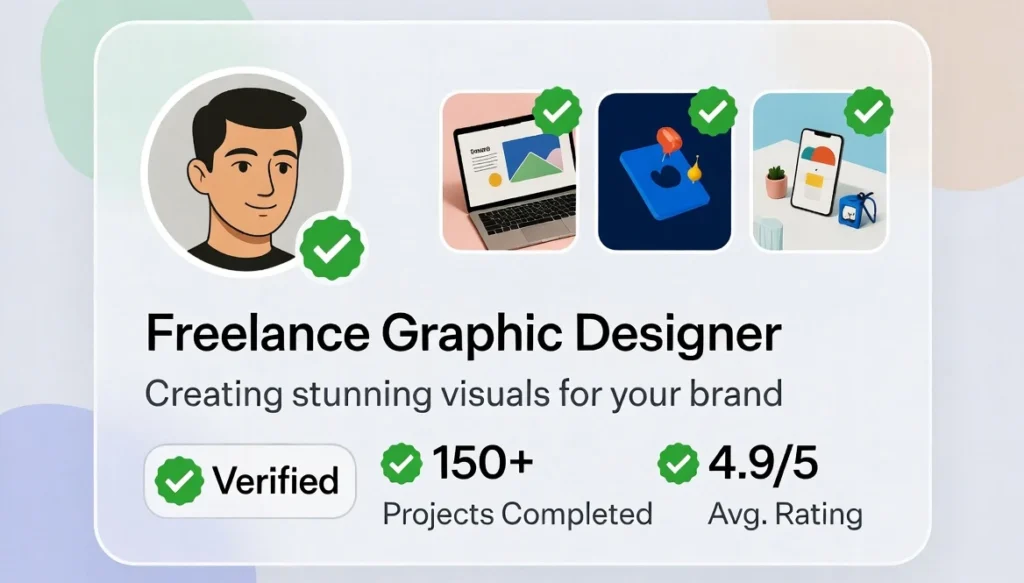
Your profile is your storefront. It’s where 80% of clients decide to hire you or skip you.
Most freelancers spend 10 minutes on their profile. No wonder they don’t get hired.
Here’s what the best profiles have:
Profile Element 1: Professional Photo (Non-Negotiable)
Use a professional headshot, not a selfie. Not a group photo. Not a meme. Professional headshot = 27% higher response rate to proposals.
If you don’t have one:
- Go to Fiverr and hire a headshot photographer ($15-50)
- Use Adobe Express to edit one of your existing photos
- Have a friend take a clean photo in natural lighting
Profile Element 2: Compelling Headline
Your headline is what clients see before reading anything else.
Bad headlines (generic):
- “Freelance Writer”
- “Expert Designer”
- “I’m a Freelancer”
Good headlines (specific, benefit-driven):
- “Technical Writer | Turning Complex Docs Into Clear Guides | $60/hr”
- “E-commerce Copywriter | 3x Sales With Conversion-Optimized Copy”
- “WordPress Developer | 500+ Sites Built | 90-Day Delivery Guarantee”
Your headline should answer: Who am I + What specific result do I deliver + Credibility signal (price, guarantee, experience).
Profile Element 3: Bio (150-200 Words)
Your bio is a mini sales pitch. Most freelancers write boring bios. Don’t be most freelancers.
Structure:
- Who you are (1 sentence) – “I’m a technical writer with 5 years experience”
- What you do (1 sentence) – “I turn complex software documentation into clear user guides”
- Who you work with (1 sentence) – “I specialize in B2B SaaS companies”
- Proof points (2-3 sentences) – “I’ve helped 30+ companies reduce support tickets by 40% with better documentation”
- Call-to-action (1 sentence) – “Let’s discuss your project”
Example bio:
“I’m a technical writer helping SaaS companies reduce support tickets through crystal-clear documentation. In 5 years, I’ve written docs for 30+ companies including [Company A], [Company B], and [Company C]. Result: My clients report 40% fewer support questions and 25% faster customer onboarding. I deliver on time, every time, and take pride in work that’s actually read. Let’s turn your confusing docs into a competitive advantage.”
Profile Element 4: Portfolio (3-5 Examples)
Add your 3-5 best examples of previous work. If you’re a complete beginner with zero clients:
- Create 2-3 samples specifically for your target client
- Show before/after if applicable
- Add a brief description of what you did and the result
For writers: Write 2 sample blog posts in your niche
For designers: Design 2 sample logos or mockups
For developers: Build 1-2 sample projects on GitHub
Most clients hire based on portfolio + proposal quality, not experience level.
Profile Element 5: Verification & Credibility
- Add phone verification (takes 2 minutes)
- Add ID verification (builds trust)
- Add LinkedIn profile (shows professionalism)
- Add any relevant certifications (if you have them)
Verified profiles get 25-50% more inquiries than unverified profiles.
→ Step-by-step guide: Read how to create your Fiverr profile or how to optimize your Upwork profile—we walk through each field.
Write Your First Proposal (The Moneymaker)

Your proposal is a sales pitch. Bad proposals get 0 responses. Good proposals close deals.
Here’s the anatomy of a winning proposal:
The 5-Part Winning Proposal Formula
Part 1: Custom Opening (1-2 Sentences)
DO NOT use generic openers like “Hi, I’m interested in your project” or “I can help you with this.”
Custom opener example:
“I see you need help with WordPress SEO optimization. I specialize in exactly this—I’ve increased organic traffic by 150-400% for 12+ WordPress sites, including [Industry] companies. I’m confident I can achieve similar results for you.”
This opener does 3 things:
- Shows you read the actual job posting
- Demonstrates relevant experience
- Sets expectations (results you deliver)
Part 2: Prove You Understand Their Problem (1 Paragraph)
Reference specific details from their posting:
“You mentioned you need a blog post about [SPECIFIC TOPIC] with 2,000 words, SEO-optimized for [KEYWORD], and formatted for WordPress publication. You also want 3 royalty-free images included and a 48-hour turnaround. I complete projects exactly like this weekly—in fact, I’ve written 15+ posts in your exact niche.”
This paragraph shows:
- You actually read their requirements
- You understand their constraints
- You’ve done this before (confidence)
Part 3: Here’s What I’ll Deliver (Bullet Points)
Be specific about deliverables:
✓ 2,000-word blog post
✓ SEO-optimized for target keyword + 4 secondary keywords
✓ 3 high-quality, royalty-free images with captions
✓ WordPress formatting + internal link suggestions
✓ Meta description and H1/H2 optimization
✓ 1 round of revisions included
✓ Delivered in 48 hours
NOT this (generic):
✓ Blog post
✓ SEO optimization
✓ Images included
✓ Fast delivery
Specific is better. Clients want to know exactly what they’re getting.
Part 4: Your Rate & Timeline (1-2 Sentences)
“I’ll complete this for $[RATE]. Timeline: 48 hours from project start. I’m available to start immediately.”
If you’re new and want to undersell initially:
“For this project, I’m offering a beginner rate of $[RATE] to build my initial portfolio on this platform. Given my track record of [X projects completed], I’m confident this is your best value.”
This shows humility while still demonstrating competence.
Part 5: Call to Action (1 Sentence)
“Ready to get started? Message me with any questions, and let’s get your blog post published.”
Proposal Best Practices
- Customize every proposal (copy-paste kills you)
- Keep it under 200 words (they won’t read 500 words)
- Include 1-2 portfolio samples if space allows
- Mention 1 relevant achievement (builds credibility)
- Proofread 3 times (typos kill deals)
→ Full guide: Learn how to write freelance proposals that convert—includes 5 actual proposal examples you can adapt.
Price Yourself Correctly (The Fear Factor)
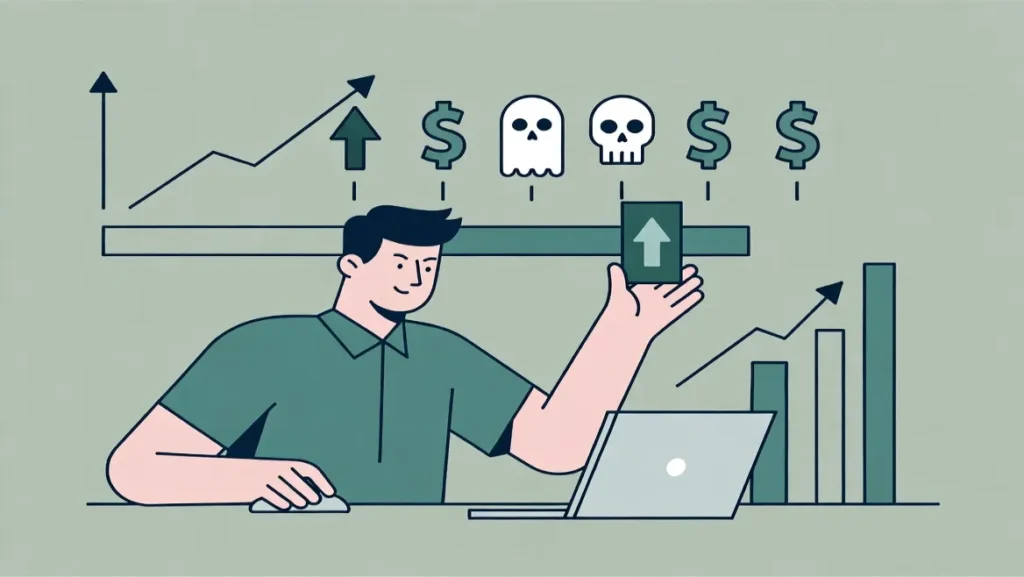
This terrifies beginners: “What should I charge?”
Most beginner freelancers charge way too little. They underestimate their value, then can’t raise rates because clients are used to low prices.
Here’s the freelancer income reality:
- Median US freelancer rate: $28/hour
- Experienced freelancers: $50-100/hour
- Top specialists: $100-250+/hour
- Full-time freelancer median income: $85,000/year
Pricing Strategy for Your First 3 Months
Month 1 (Your First 5 Projects): Competitive Entry Pricing
- Fiverr: $5-15 per gig (LOW, yes, but you need reviews and testimonials)
- Upwork: $15-25/hour
- Goal: Get reviews. Build portfolio. Price is secondary.
- Reality: You’ll make minimal money ($200-500/month), but you’re building momentum.
Month 2 (Projects 6-15): Price Increase After Results
- Fiverr: $25-50 per gig (raise after 5-10 reviews)
- Upwork: $35-50/hour
- Goal: More reviews + higher rates + better-paying clients
- Reality: $500-1,500/month as rates increase
Month 3+ (15+ Projects): Specialist Positioning
- Fiverr: $75-200+ per gig (or create premium/pro packages)
- Upwork: $75-150+/hour
- Goal: Higher margins + fewer clients (less stress) + more selective
- Reality: $2,000-5,000+/month with 20-30 hours work
The Golden Rule: Raise Rates Every 10 Projects
After completing 10 projects successfully:
- Increase your rate by 20-30%
- New clients pay the higher rate
- Existing clients stay at old rate
- Continue raising every 10 projects
Example progression:
- Projects 1-10: $15/hour
- Projects 11-20: $19.50/hour (+30%)
- Projects 21-30: $25.35/hour (+30%)
- Projects 31-40: $33/hour (+30%)
- Projects 41-50: $42.90/hour (+30%)
You can go from $15/hour to $45+/hour in 6 months by simply completing work, building reviews, and raising rates systematically.
→ In-depth guide: Read our freelancing rates guide—includes calculator and by-skill pricing.
Land Your First 10 Clients (Fastest Path to Income)
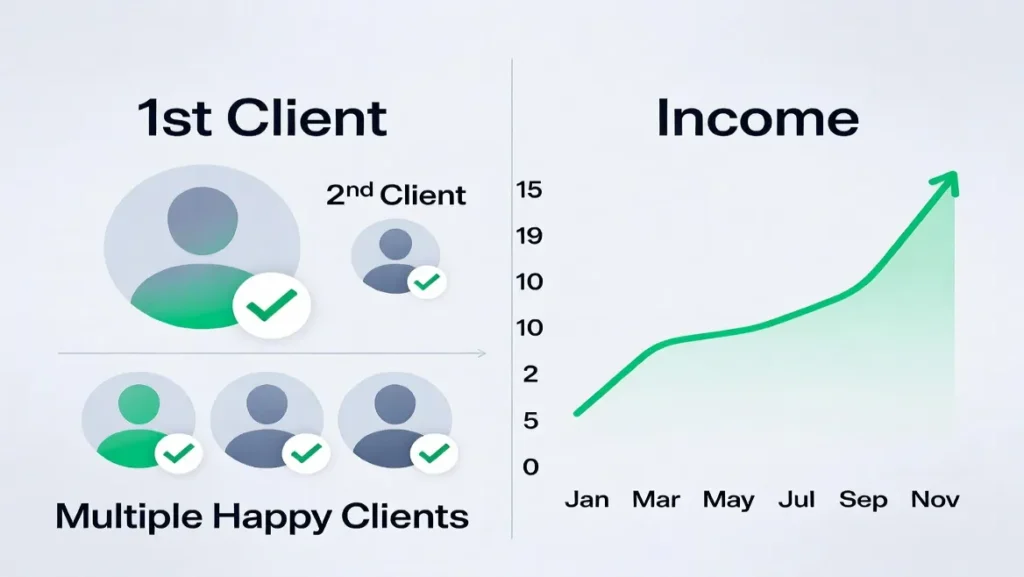
Your first 10 clients come from:
- 70% from sending targeted proposals
- 20% from getting platform badges/certifications
- 10% from direct outreach or referrals
The First Client 7-Day Sprint
Day 1: Set up profiles on 2 platforms (Fiverr + Upwork recommended)
Day 2: Post first gig on Fiverr (if applicable)
Day 3-4: Send 20 targeted proposals on Upwork (don’t send generic copy-paste)
Day 5: Wait for responses (should get 5-10 by now)
Day 6-7: Send 20 more proposals
By day 7, you’ll likely have landed 1-3 initial clients.
Template: The First-Client-Winning Proposal
Use this template for your first 5 proposals (customize heavily):
“Hi [CLIENT NAME],
I saw you need [SPECIFIC REQUIREMENT]. I specialize in exactly this.
Here’s what I’ll deliver:
✓ [Specific deliverable 1]
✓ [Specific deliverable 2]
✓ [Specific deliverable 3]
I’ll complete this for $[RATE] in [TIMELINE].
I’m available to start [DATE]. Let’s chat about your specific needs.
[Your Name]”
This 4-paragraph proposal closes deals because:
- It’s customized (shows effort)
- It’s specific (clear on deliverables)
- It’s confident (clear pricing)
- It’s brief (they’ll actually read it)
If you’re trying to land your first client, read this Upwork beginner strategy
Common Beginner Mistakes (Avoid These!)
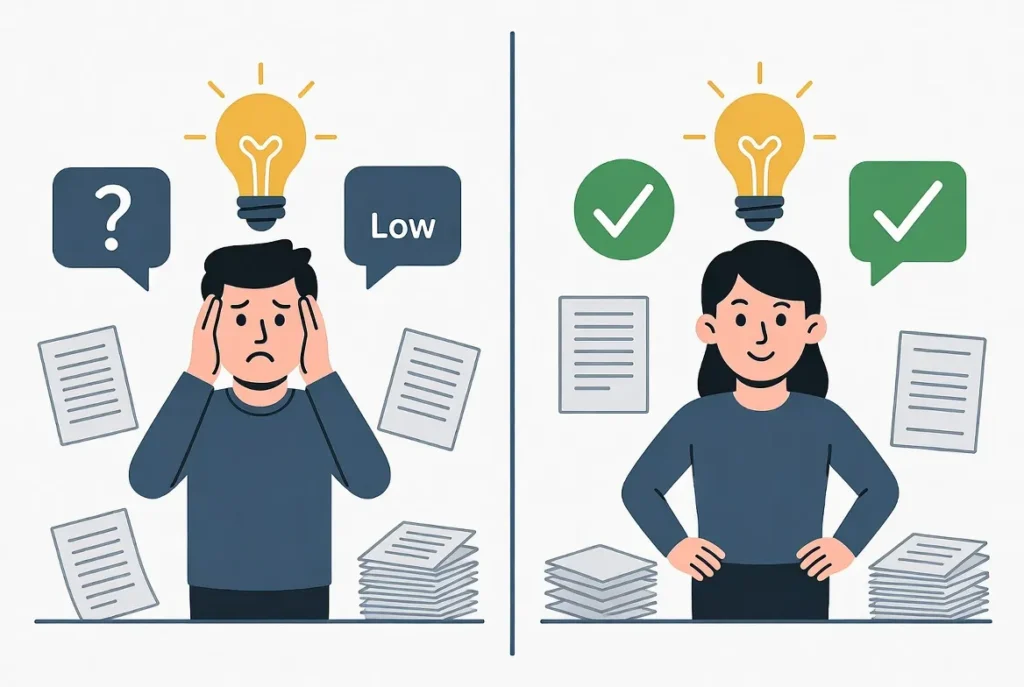
❌ Sending copy-paste proposals: “I’m interested in your project.”
✓ Send customized proposals: “I saw you need X, I’ve completed 12 similar projects.”
❌ Overexplaining in proposals: 500+ word essays
✓ Keep it brief: 4 paragraphs max
❌ Undercutting massively: Bidding $5 when the job pays $500
✓ Price competitively: Research similar projects first, bid strategically
❌ Disappearing after landing first client: Don’t follow up
✓ Over-deliver on first project: Go 20% beyond requirements, ask for a testimonial
Frequently Asked Questions About Starting Freelancing in 2026
How long does it take to make $2,000 per month freelancing?
If you start at competitive beginner rates ($20–$25/hour on Upwork) and work 20–30 hours per week, most freelancers reach $2,000/month within 4–6 months. On platforms like Fiverr, it may take 6–12 months due to lower starting rates, but you build reviews faster. The key is consistent proposals, skill improvement, and raising rates after every 10 projects.
Do I need a business license to start freelancing in the US?
In most cases, you can start freelancing as an individual without forming a company. However, once your income becomes consistent, forming an LLC can offer legal protection and potential tax benefits. Costs vary by state, typically ranging from $100–$300. Always check local regulations or consult a professional for advice.
What is the biggest mistake beginner freelancers make?
The most common mistake is underpricing. Many beginners charge too little out of fear. Low rates attract low-quality clients and make it harder to increase prices later. Start at realistic market rates, focus on delivering results, and gradually raise your rates as you gain reviews.
Can I use multiple freelancing platforms at the same time?
Yes. In fact, diversifying across 2–3 platforms reduces risk. Many successful freelancers split income between Upwork, Fiverr, and direct clients. This protects you if platform algorithms change or client demand shifts.
How many hours per week should I work when starting freelancing?
20–30 hours per week is ideal if you still have a full-time job. This allows you to build clients steadily without financial pressure. Once you consistently earn $2,500/month or more, you can evaluate going full-time. For anyone still in a full-time role, freelancing while still employed is a structured way to test the waters before committing, covering everything from contract clauses to tax setup to finding the first client without risking the primary income.
When should I raise my freelance rates?
A practical rule is to increase your rates by 20–30% after every 8–10 successful projects. Once you have 20+ positive reviews, you can often charge 2–3x your starting rate for new clients.
Is freelancing sustainable long-term?
Yes, but long-term success requires diversification. Build an email list, attract direct clients (no platform fees), and strengthen your personal brand. After 12–24 months, aim for at least 50–70% of income from direct clients.
My Experience Starting From Zero
When I started freelancing, I didn’t have a secret strategy, a massive audience, or some hidden connection. I had a laptop, Wi-Fi, and a slightly unhealthy obsession with refreshing my inbox.
The first week? Silence.
The second week? Two polite rejections.
By day 14, I landed my first small project. It wasn’t glamorous. It didn’t pay much. But it changed everything. Because it proved one thing: strangers on the internet will pay you for real skills if you position yourself correctly.
What made the difference wasn’t talent. It was structured. I picked one skill, created three sample projects, and sent 20 highly customized proposals instead of blasting generic copy-paste messages. I treated it like a system, not a gamble.
In the first three months, I made mistakes underpricing, overworking, and saying yes to the wrong clients. But I corrected fast. By month six, I was consistently earning $3,500 per month, working fewer hours than in my previous job.
Freelancing isn’t magic. It’s momentum. Once you understand the mechanics, skill, proof, proposals, and pricing, the fear fades and the results compound.
And that’s exactly what this guide is built to help you replicate.
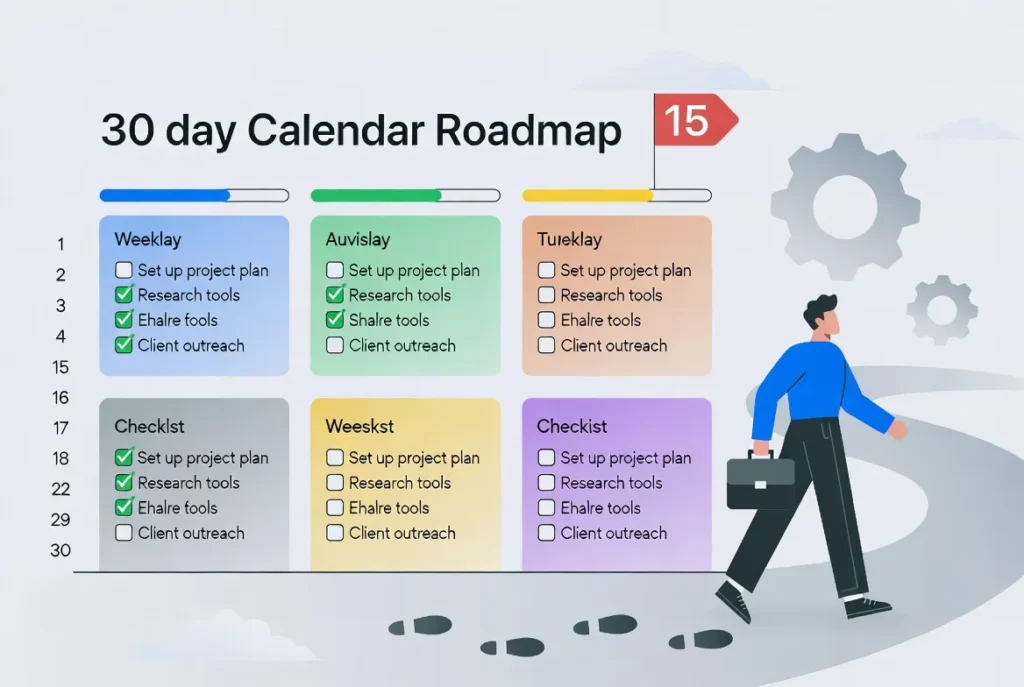
Conclusion: Your 30-Day Freelancing Action Plan
Starting freelancing doesn’t require permission, capital, or a degree.
Here’s your step-by-step 30-day roadmap:
Week 1: Choose niche → Validate demand on Upwork/Fiverr → Set up profiles
Week 2: Create portfolio/profile → Send 20 proposals → Land first 2-3 clients
Week 3: Complete 3-5 projects → Collect testimonials/reviews → Raise rates slightly
Week 4: Land 3-5 more clients → Reach $500-1,000/month income → Plan next steps
Most people won’t do this because it feels hard. But the hardest part is starting.
You now have no excuses.
The best time to start was yesterday. The second-best time is right now.
Go sign up on Upwork. Set up your profile. Send your first proposal. Land your first client.
The rest is momentum.
Related Resources
- Best Freelancing Platforms for Beginners 2026 – Deep comparison of Upwork vs Fiverr vs Freelancer.com
- How to Write Freelance Proposals That Convert – 5 actual proposal examples + best practices
- Freelancing Skills That Pay Well in 2026 – Which skills earn the most money
- How to Create a Fiverr Profile Step-by-Step – Beginner setup guide
- How to Set Freelance Rates – Pricing calculator + strategy
- What Does Freelancing Mean? – Definition + real examples
- Nocosttools– For calculating price, image size, etc.
Email Signup CTA
Ready to earn $2,000-5,000/month as a freelancer?
Join 3,000+ freelancers getting weekly tips on landing high-paying clients, setting rates, and scaling your business.

No spam. One email per week. Unsubscribe anytime.