Most Fiverr sellers write gig descriptions the same way. A quick intro about their experience. A list of services. A polite “message me before ordering.”
Then they wait for orders that never come.
The problem is not effort. It is a misunderstanding of the job of a gig description.
If you are trying to figure out how to write a Fiverr gig description that actually performs, you need to understand this first: your description has two completely different responsibilities.
- It must satisfy the Fiverr search algorithm to get impressions for your gig.
- It must persuade buyers to click Order Now once they land on your page.
If you are still deciding whether Fiverr is the right platform for your skills, the Fiverr vs Upwork vs Freelancer comparison covers which platform suits different freelance niches. This guide assumes you have chosen Fiverr and are ready to optimize.
Do only one, and you either rank but do not convert, or convert beautifully but never get seen. This guide covers the complete system, from title optimization to tag strategy to the description formula itself, so that by the end, you know exactly what to write and why every line of it works.
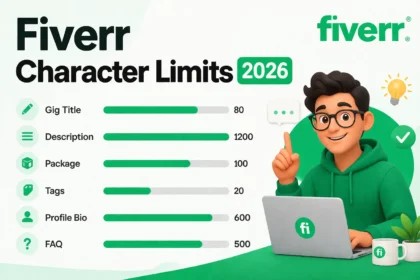
What is the Fiverr gig description character limit? Fiverr gig descriptions have a hard limit of 1,200 characters, which equals approximately 200–240 words. This limit applies to the description field only, the FAQ section has a separate character allowance per question. Using close to the full 1,200 characters is recommended; blank space signals low effort to both Fiverr’s algorithm and buyers reviewing the gig.
Why Most Fiverr Gig Descriptions Don’t Work (The Two-Job Problem)
Most Fiverr gig descriptions fail because sellers optimize for either ranking or persuasion, not both. Fiverr’s algorithm evaluates keyword relevance and performance metrics, while buyers evaluate clarity, trust, and value. A gig must satisfy both systems simultaneously to succeed.
Most sellers treat “optimize your gig” as one vague task. In reality, ranking and conversion are separate levers.
The algorithm determines whether you appear in search results. Buyers determine whether you earn money. When impressions are low, the issue is usually keyword optimization. When impressions are deep, but orders are low, the issue is persuasion.
Understanding that separation changes how you structure your entire gig.
What Fiverr’s Algorithm Is Actually Looking For
According to Fiverr’s own help documentation and community guidance, the keyword hierarchy works in this order:
- Gig title (highest weight)
- Positive keywords field
- Gig description
This is Fiverr’s keyword hierarchy. The title carries the most ranking power. After that, your tags expand eligibility. The description reinforces relevance.
On top of keyword relevance, Fiverr’s ranking factors include performance metrics: click-through rate, conversion rate, completion rate, and buyer satisfaction. Over time, these behavioral signals can outweigh raw keyword placement.
That means keyword optimization gets you in the race. Performance keeps you there.
What Buyers Are Actually Reading For
Buyers decide in seconds.
They are scanning for three answers:
- Does this person do exactly what I need?
- Can I trust them to deliver?
- Is this worth the price?
If your first three lines talk about you instead of their problem, you lose attention immediately.
Your description must answer all three questions before they scroll.
The Difference Between Impressions and Clicks
Impressions come from keyword eligibility.
Clicks come from your gig card: thumbnail + title.
Orders come from your description and pricing clarity.
These are three separate systems:
| Metric | What Controls It |
|---|---|
| Impressions | Title + Tags |
| CTR | Thumbnail + Title |
| Conversion Rate | Description + Pricing + Trust Signals |
When you diagnose performance correctly, optimization becomes strategic instead of random.
The Fiverr Gig Title Formula: Where Ranking Starts
A high-ranking Fiverr gig title places the primary keyword at the beginning, follows the “I will” format, stays under 50 characters for display clarity, and adds specificity that signals buyer intent.
The title carries the most algorithmic weight. Before you optimize your description, your title must be correct.
The Anatomy of a High-Ranking Fiverr Gig Title
Fiverr titles can be up to 80 characters. I recommend keeping them under 50 characters so they are not cut off on the gig card.
The format is always:
I will + specific service
The formula:
I will [primary keyword] + [specificity modifier] + [buyer benefit]
Examples:
❌ Weak: I will do writing for you
✅ Strong: I will write SEO blog posts for WordPress
❌ Weak: I will edit videos
✅ Strong: I will edit YouTube videos with captions
Place the primary keyword as close to the beginning as possible. Fiverr reads left to right in weighting.
How to Research the Right Keywords for Your Gig Title
Use Fiverr autocomplete.
Type your service into Fiverr’s search bar. The suggested phrases are real buyer queries. That is live demand data.
Look for:
- A manageable number of competing gigs
- Top-ranking gigs with active orders
- Clear buyer intent in the phrase
New sellers should target narrower keywords with strong intent rather than broad competitive ones.
The same principle — leading with buyer intent rather than seller credentials, applies across platforms. The Upwork equivalent of this formula is covered in the Upwork proposal template guide, which follows an identical hook-credibility-deliverables structure.
The URL Strategy Most Sellers Miss
Fiverr generates your permanent gig URL from the first title you save.
That means your initial title determines your URL structure forever.
For permanent URL optimization, I recommend creating a keyword-heavy first version focused purely on search relevance. After the URL locks in, adjust the visible title for readability.
Most sellers never realize this. It is a small structural edge that compounds over time.
Myth vs Reality: 9 Fiverr Description Rules That Are Outdated in 2026
Most Fiverr advice on the open web is recycled from 2020–2022. The platform has changed. The algorithm has changed. Buyer behavior has changed. Some of the most repeated rules are now wrong, and a few are actively damaging.
Here is the audit, with what the rule was, what the current reality is, and why the gap exists.
Myth 1: “The Word Limit is 250 Words”
Reality: There is no word limit. The cap is 1,200 characters, which varies by word length. Sellers who optimize for a 250-word target frequently exceed the character cap and get their description truncated mid-sentence on save. The character count is what Fiverr enforces; the word count is a derived approximation.
Myth 2: “Package Descriptions Allow 500–800 Characters Per Tier”
Reality: Each package description is capped at 100 characters per tier. Roughly one sentence. This is the most commonly misreported number in Fiverr guides, and it matters because trying to write a 400-character package description triggers Fiverr’s “package description is too long” error and prevents the gig from saving.
The 100-character cap is restrictive on purpose. Fiverr wants each package to be scan-readable on a search results card.
Myth 3: “Use the Word ‘Professional’ to Sound Credible”
Reality: “Professional,” “high-quality,” “best service,” and “expert” are now negative signals in 2026 descriptions. They appear in over 80% of underperforming gigs. The algorithm has learned the pattern over years of training data, and buyers tune them out within the first second of reading.
Specificity beats credibility adjectives every time. “I use Surfer SEO and Frase for keyword research” outperforms “I am a professional SEO writer” in both conversion and ranking.
Myth 4: “Repeat Your Primary Keyword 5–6 Times”
Reality: Fiverr’s 2026 ranking model rewards semantic variety. Three natural mentions of the primary keyword plus 5–7 LSI variations (latent semantic terms) outperform any density-based approach. Over-repetition triggers the same suppression layer that catches stuffed titles.
The right pattern: primary keyword in the first 3 lines, once in the middle, once near the CTA. Fill the rest with related terms buyers actually search.
Myth 5: “FAQ Section is Optional Polish”
Reality: FAQs are indexed as a separate keyword surface in the gig’s search profile. They do not compete with the main description for keyword density, which makes them the highest-leverage place to capture long-tail buyer queries. Filling 5–10 FAQs is now a stronger ranking lever than rewriting the description.
Most sellers leave FAQs empty. That is a free ranking position they are walking past.
Myth 6: “Edit Your Gig Weekly to Stay ‘Active'”
Reality: Active seller signals (response time, completion rate, recent orders) are different from active gig signals (the gig content itself). Editing the gig content resets the algorithm’s evaluation window each time. Sellers who edit weekly keep their gig in a permanent data-gathering loop and never get the ranking benefit of stable performance data.
Two meaningful edits per quarter is the practical ceiling.
Myth 7: “External Traffic Always Helps Your Ranking”
Reality: Only converting external traffic helps. Cold traffic from random Facebook groups or untargeted Twitter posts creates an impression-to-order gap that signals low conversion to the algorithm. Large volumes of irrelevant external clicks actively suppress the gig.
Share your gig where your actual target buyer spends time. Quality over volume on every external referral.
Myth 8: “The First Line Must Contain Your Keyword Exactly”
Reality: Front-loading the keyword is correct. Forcing an exact match in the first 6 words is too aggressive in 2026 and triggers the same soft-stuffing penalty that catches over-optimized titles. The sweet spot is natural primary-keyword usage somewhere in lines 1–3, weighted toward the front but not jammed against the opening word.
Myth 9: “ChatGPT-Written Descriptions Are Penalized”
Reality: Fiverr does not detect or penalize AI authorship. What it penalizes are the patterns AI writing tends to default to: generic hooks, padding, no specificity, vague credibility claims. A well-edited AI draft outranks a poorly written human draft.
Use AI as a drafting tool. Then sharpen the hook, add one verifiable credibility claim, name your tools, and embed your tags naturally. The structure matters more than the author.
Quick Reference
| Myth (still repeated) | 2026 Reality |
|---|---|
| 250-word limit | No word limit; 1,200-character cap |
| Package descriptions allow 500–800 chars | 100 characters per tier, hard cap |
| Use “professional” for credibility | Generic adjectives are negative signals |
| Repeat keyword 5–6 times | 3 natural mentions + LSI variations |
| FAQ is optional polish | FAQ is a separate keyword surface |
| Edit weekly to stay active | 2 edits per quarter maximum |
| External traffic always helps | Only converting external traffic helps |
| Keyword in first 6 words exact match | Natural usage in lines 1–3 |
| ChatGPT descriptions get penalized | Only AI patterns get penalized, not AI authorship |
The most damaging Fiverr advice on the open web today is not new bad advice. It is correct 2021 advice that is now wrong.
What Is the Fiverr Gig Title Character Limit in 2026?
Fiverr gig titles allow a maximum of 80 characters. However, the visible limit on gig cards is closer to 60–65 characters before titles are cut off with an ellipsis. A buyer scanning search results never sees the truncated portion. The practical ceiling for titles that display fully is around 60 characters.
This distinction matters because the truncated text is not a display bug. It is a permanent cap on what buyers read before deciding whether to click.
The keyword closest to the start of your title carries the most weight. Fiverr reads title relevance left to right. Placing qualifiers before your primary keyword pushes the actual service term toward the truncation point, where it may never be seen.
Here is how character count changes both visibility and clarity:
| Title Example | Characters | Display Result |
|---|---|---|
| I will do writing | 18 | Displays fully, but too vague to rank |
| I will write SEO blog posts for WordPress | 42 | Displays fully, clear search signal |
| I will write SEO-optimized content for SaaS brands | 51 | Displays fully, strong buyer intent match |
| I will write long-form SEO blog posts for Shopify stores targeting US buyers | 76 | Truncated in most gig card views |
The 80-character hard limit is useful for keyword density. The 60-character practical limit is useful for click-through rate. Both numbers belong in your title strategy.
For 40+ tested title examples by category with exact character counts, the Fiverr gig title character limit guide breaks down each format with display previews.
When the 1,200-Character Rule Backfires: Niches Where Shorter Wins
Almost every Fiverr guide repeats the same line: “use 900–1,100 characters.” It is a reasonable starting point, but it is wrong as a universal rule. There are specific niches and buyer modes where filling the space actively reduces conversion. The right description length is a function of three variables: ticket size, dominant device, and buyer mode.
When Long Wins (1,000–1,200 characters)
These conditions push descriptions toward the upper end of the cap:
- Average order value above $200
- Niches where buyers research extensively before ordering (full-stack development, brand identity packages, technical writing, legal templates)
- Desktop-dominant traffic
- Buyers in “research mode” comparing 5+ sellers before deciding
In these categories, a thin description reads as a thin service. Fill the cap. Use every credibility surface.
When Medium Wins (900–1,100 characters)
The default zone the existing formula covers. This is the right range for:
- Mid-ticket services ($30–$150)
- Mixed desktop and mobile traffic
- Buyers in “compare mode” weighing 2–4 sellers
If your niche does not have a clear reason to go shorter or longer, stay here.
When Short Wins (600–850 characters)
This is the zone almost no guide will tell you about. Specific conditions where shorter beats the standard advice:
Impulse-buy categories. Resume tweaks, social media post graphics, simple Canva edits, short voiceovers. Buyers in these categories decide in under 12 seconds. A 1,100-character description forces a scroll that 700 characters would not. Conversion drops measurably above 850 characters in these niches.
Mobile-dominant niches. In gaming, voice over, music production, and lifestyle services, 60–70% of traffic comes from mobile. Long descriptions get visually buried below the package selector on phone screens. Keep it tight, front-load the keyword, and push secondary content into the FAQ section where it gets keyword credit without slowing the buy decision.
Repeat-buyer services. If your gig has 100+ reviews and most orders come from returning buyers or referrals, length matters less than the package configuration. The description is for the first impression on new buyers only.
The Buyer Mode Framework
Match length to the mode buyers are in when they land on your gig:
| Buyer mode | Behavior | Recommended length |
|---|---|---|
| Browse | Scanning many gigs, comparing thumbnails | 1,000–1,200 characters (gives the algorithm more keyword surface to surface you) |
| Compare | Has shortlisted 3–5 sellers, reading descriptions | 900–1,100 characters (the standard sweet spot) |
| Decision | Knows what they want, ready to order | 600–850 characters (every extra line risks losing them) |
Decision Tree: How Long Should Your Description Be?
Run through this in order:
- Is your average ticket above $200? → Aim for 1,000–1,200 characters.
- Is your niche mobile-dominant? → 800–900 characters, keyword front-loaded.
- Is your service an impulse purchase under $25? → 600–800 characters plus a heavy FAQ section (5–7 entries).
- None of the above? → 900–1,100 characters (your existing default).
The 900–1,100 rule is a useful starting hypothesis. Test against your own analytics within the first 60 days and adjust based on which length actually converts in your specific category. For a deeper breakdown of how each field on your gig page works under its own constraints, the Fiverr character limits guide covers every field with target ranges.
The Fiverr Gig Description Formula (The 5-Part System)
A high-converting Fiverr gig description follows a five-part system: Hook, Credibility Signal, Deliverables List, Keyword Layer, and Clear Call-to-Action. Each part serves either ranking, conversion, or both.
The gig description has a 1,200 character description limit, roughly 200–240 words. Every line must work.
Part 1 — The Hook (Lines 1–2)
Open with the buyer’s problem, not your experience.
Formula:
[Buyer problem] + [Clear solution]
❌ Hi, I’m John and I have 5 years of experience.
✅ Need blog posts that actually rank on Google? I write SEO-optimized content designed to drive organic traffic.
The primary keyword should appear naturally in these first lines.
Part 2 — The Credibility Signal
Prove capability without bragging.
Formula:
[Specific tool or specialization] + [Context] + [Outcome]
Example:
I use Surfer SEO and keyword research tools to structure content around real search intent, helping your site rank faster and convert readers into customers.
Specificity builds trust faster than generic claims.
Part 3 — The Deliverables List
Use bullet clarity.
Example:
You will receive:
- Fully optimized blog post (up to 1,000 words)
- Keyword research included
- Meta title and description
- Internal linking suggestions
- 100 percent original content
Clarity reduces pre-order messages, which improves conversion rate.
Pricing each deliverable correctly at this stage directly affects conversion, a decision that connects to how you structure your overall freelance rate strategy..
Part 4 — The Keyword Layer
Use 3–4 natural appearances of your primary and secondary keywords.
Placement strategy:
- Primary keyword in first 2–3 sentences
- Secondary keywords in deliverables
- Long-tail variations in FAQs
Avoid stuffing. Fiverr can suppress over-optimized descriptions.
Part 5 — The Call to Action
End with direction.
For new sellers:
Message me before ordering so we can confirm your requirements.
For established sellers:
Click Order Now, and let’s get started on your project today.
Specific CTAs increase engagement signals.
Fiverr Profile Bio, About Section, and Package Description Limits
Character limits on Fiverr extend beyond the main gig description. Each section of your profile and gig is a separate surface for keywords and buyer trust signals. Most sellers optimize only the description and ignore the rest.
Seller profile bio: The public seller description visible on your profile allows approximately 600 characters. Buyers see this before clicking any specific gig. It should include your primary specialization, the tools or methods you use, and one specific credibility statement. Vague bios (“I am passionate about design”) convert worse than specific ones (“I design Shopify landing pages using Figma and convert at 3x the industry average”).
Profile “About” section: This extended section allows roughly 600–1,000 characters and sits below the bio on your profile page. Few sellers fill it. That gap is an opportunity. A detailed about section signals to both buyers and Fiverr that this is an active, invested seller.
Package descriptions: Each of the three package tiers (Basic, Standard, Premium) has its own description field with a hard cap of 100 characters per tier. This is enough for one clear sentence describing what that tier includes.. Use each one to describe who the package is for, what is included, and what outcome the buyer gets. Treating these as copied versions of each other is a missed opportunity.
Gig FAQ section: Each FAQ entry has its own character allocation per question and answer. Fiverr’s guidance recommends 3–5 FAQ entries per gig. These entries are indexed as additional keyword surfaces beyond the main description. An FAQ about “turnaround time” uses buyer-intent language that your description may not include.
For a complete framework on how to price and structure packages across all three tiers, the Fiverr gig pricing strategy guide covers character usage alongside positioning and value framing for each level.
What Is the Fiverr Gig Description Character Limit in 2026?
The Fiverr gig description field has a hard cap of 1,200 characters, which works out to roughly 200–240 words depending on average word length. This limit applies to the main description field only. The FAQ section, package descriptions, and requirements fields each have their own separate character allowances.
The 1,200-character ceiling is not a target. It is the outer boundary. What matters more is the floor.
Descriptions under 800 characters tend to underperform in impressions. The reason is structural: shorter descriptions provide fewer keyword signals for Fiverr’s algorithm and fewer credibility cues for buyers scanning the page. Fiverr’s internal quality guidance treats noticeably short descriptions as a signal of low effort, which can reduce how frequently a gig surfaces in search results.
High-converting gigs consistently land in the 900–1,100 character range. That window gives the algorithm enough text to extract relevance while keeping the description tight enough to hold buyer attention without scrolling fatigue.
The five-part formula above distributes those characters purposefully:
| Section | Approx. Characters | Purpose |
|---|---|---|
| Hook (lines 1–2) | 100–150 | Capture attention, state buyer problem |
| Credibility signal | 80–120 | One specific, verifiable claim |
| Deliverables list | 400–500 | Clarity, keyword surface, conversion |
| Keyword reinforcement | Woven throughout | Algorithm relevance, not a separate section |
| Call-to-action | 60–80 | Direction, engagement signal |
When Neemesh audited underperforming Fiverr gigs as part of his content strategy research for EduEarnHub, descriptions under 800 characters consistently showed lower impression counts in analytics than equivalent gigs with 1,000+ character descriptions, even with similar titles and tags. The description length signalled the effort level before the algorithm or the buyer had read a single word.
A note on 2026 policy context: Fiverr has not changed the 1,200-character cap itself. What has shifted is how the algorithm weights engagement signals. Gig cards now surface more prominently when click-through rate, conversion rate, and order completion are all strong. A thorough description that answers buyer questions before they send a message directly reduces pre-order friction and supports all three metrics.
Fiverr Search Tags: How to Use All 5 Without Wasting Them
Fiverr allows five search tags, and each should target a distinct search variation rather than repeating the same phrase. Tags expand your eligibility across related buyer queries.
According to Fiverr’s official gig creation guidelines, you can add up to five tags that describe your service.
What Fiverr’s Tags Actually Do
Tags determine which searches your gig can appear in.
They do not replace your title. They extend reach.
Think of them as eligibility expanders.
The 5-Tag Strategy
- Tag 1: Root keyword (blog writing)
- Tag 2: Niche modifier (SEO content writing)
- Tag 3: Format (long-form article)
- Tag 4: Audience (SaaS blog content)
- Tag 5: Qualifier (US English writer)
This covers five distinct search patterns.
The 30-Day Rule
Fiverr’s own algorithm documentation emphasizes stability.
If you change tags weekly, the system cannot gather performance data.
Make changes once. Then wait 30 days before evaluating results.
Constant editing traps gigs in low-impression cycles.
Industry Insider: 6 Algorithm Mechanics Most Fiverr Guides Skip
This section covers mechanics that operate behind the publish button. They are not in Fiverr’s help docs, they are not in beginner guides, and they are the difference between a gig that ranks within 60 days and a gig that sits on page 4 for 6 months.
The Honeymoon Window Math
New gigs get an artificial impression boost for approximately 30 days after publishing. Fiverr’s documentation calls it the “new seller boost.” Experienced sellers call it the honeymoon.
Most sellers waste it because their description was a draft they planned to “improve later.” The correct play is to spend 5–7 days finalizing the description before hitting publish, then publish on a Monday or Tuesday morning Eastern Time, when global buyer activity is highest. This puts the honeymoon’s first 72 hours, the highest-impression window in the gig’s life, in front of the largest possible buyer pool.
A gig that converts 1 order in its first 72 hours enters Level 0 with a positive trajectory. A gig that gets 200 impressions and 0 orders in that same window starts a 90-day uphill climb.
The URL Hash Mechanic
The slug Fiverr generates from your first-ever saved title becomes a permanent ranking signal. The article already covers this.
What is less reported: Fiverr also stores a category fingerprint from your first save that influences which subcategories the gig is eligible to surface in. Switching subcategories later adds eligibility but does not fully replace the original signal. If you started in “Writing & Translation > General Writing” and later moved to “Writing & Translation > SEO Writing,” your gig retains some weight in the original category, even if you do not want it there.
The implication: choose the most specific subcategory the first time. Recovery is partial.
Re-Index Lag
When you edit a description, the changes are visible to buyers immediately. The algorithm’s evaluation of those changes lags 48–96 hours. Sellers who edit on a Friday and check rankings on Saturday morning are looking at stale data.
The practical rule: never evaluate the impact of an edit in less than 5 days. Most ranking shifts from a description change appear in days 3–7, not day 1.
Cancellation Half-Life
Cancellations damage rankings. That is widely known.
What is not widely known: the damage decays. The first 30 days after a cancellation carry the heaviest weight. By day 90, the signal has decayed by roughly 70%. By day 180, it is mostly washed out, assuming positive order data has accumulated in the meantime.
Sellers fight cancellations the wrong way. They pause the gig in panic, which removes the positive data the algorithm needs to overwrite the signal. The correct response is to keep delivering successful orders. Fresh positive data is the fastest cancellation antidote.
Private Review Weight
Every Fiverr buyer leaves two reviews. The public review every visitor can see, and the private review only Fiverr can see. The private review weights heavier than the public one for ranking purposes.
This is why two gigs with identical 5-star public ratings can rank wildly differently. Public 5 stars plus weak private feedback ranks worse than public 4.7 stars plus strong private feedback.
There is no way to see private reviews. The tell is indirect: a sudden drop in impressions immediately after a delivered order, with no public review change, almost always points to negative private feedback. The fix is to ask buyers explicitly about communication, delivery time, and clarity of requirements at the start of every order, since those are the dimensions private feedback scores.
The FAQ Keyword Surface Multiplier
FAQ answers are indexed separately from the main description and do not compete for keyword density. This makes them the single highest-leverage ranking lever most sellers ignore.
If your description targets “fiverr gig description,” the FAQ section is where you capture “fiverr gig description character limit 2026,” “fiverr gig description word limit,” “fiverr gig description best practices,” and “fiverr gig description 1200 characters.” Each FAQ answer is its own micro-page in the algorithm’s index.
The practical move: write 5–10 FAQs that each target a distinct long-tail variation of your primary keyword. Use buyer-intent language in the questions. Answer in 200–400 characters per entry.
What This Means for the Description Itself
Most of what determines your ranking is not visible in the gig editor. It is in mechanics that operate around the description: when you publish, what URL you locked in, how often you edit, and what private feedback says about you. The description does the work of conversion. The mechanics around it do the work of distribution.
Optimize the description with the formula in this guide, and then audit each of the 6 mechanics above before assuming the copy is the limiting factor. For a deeper look at how all these signals connect through your gig title and tag strategy, the Fiverr gig title character limit guide covers the title-side mechanics in detail.
The Description as Part of a Portfolio: Cross-Cannibalization, Cluster Mapping, and the Seller Profile View
This section is for sellers who already understand the basics. If you have one gig and are still working on your first 10 orders, the formula in the rest of this guide is what you need. Come back to this section when you are ready to scale to 3 or more gigs on the same profile.
The leap from one optimized gig to a portfolio of 3–7 coordinated gigs is the leap from a Level 1 seller earning $500 a month to a Top Rated seller earning $5,000+. Almost no guide covers this transition because almost nobody has lived through it.
Cross-Cannibalization at the Keyword Level
When two of your gigs target overlapping keywords (“SEO blog writing” and “SEO content writing”), Fiverr’s algorithm picks one to surface and suppresses the other. Most multi-gig sellers do not notice this because they assume each gig competes independently. They do not. They compete against each other before they compete against external sellers.
The signal: when you launch gig #2, gig #1’s impressions drop by 15–30% within 30 days. If the impression decline does not recover within 60 days, the two gigs are cannibalizing.
The fix is a keyword cluster map drawn before creating gig #2. Each gig should own a distinct keyword cluster with no more than 20% term overlap with any other gig on your profile.
Example for an SEO writer:
- Gig 1: General SEO blog writing (broad, captures “seo content writer,” “seo blog post”)
- Gig 2: SaaS-specific blog writing (narrow, captures “saas content writer,” “b2b saas blog”)
- Gig 3: Ecommerce product descriptions (different format, captures “ecommerce copywriter,” “product description writer”)
Three distinct clusters. No cannibalization.
The Portfolio Anchor Gig
In a multi-gig portfolio, one gig will be the anchor: highest traffic, mid-tier conversion, broad reach. The others should be structured to support the anchor, not compete with it.
The portfolio structure that works:
- Anchor gig: broad primary keyword, mid-ticket pricing, designed for high impressions
- Premium satellite: narrow niche, high-ticket pricing, designed to catch research buyers
- Volume satellite: lower-ticket variant, designed to catch impulse buyers and feed positive completion signals into your overall seller score
Descriptions across all three should reference your specialty consistently. Fiverr’s algorithm reads the profile-level signal: a coherent specialist outranks a generalist with 3 unrelated gigs.
The Seller Profile View
When a buyer clicks on a gig, Fiverr’s algorithm evaluates the seller profile context the gig sits inside. A strong gig on a profile with a 200-character bio and three half-completed gigs ranks worse than the same gig on a profile with a full bio, 5 active gigs, and consistent message response.
The implication: description optimization is partly a profile optimization problem. Fill the bio to 500–580 characters. Fill the About section. Keep 4–7 active gigs in the same specialty. The whole profile is what ranks, not just the individual gig.
Description Voice Consistency Across Multiple Gigs
Across a portfolio, the same first-person voice, the same tool naming convention, and the same CTA style outperform a mix of styles. The algorithm appears to use stylometric features to detect consistency, and buyers reading 2 gigs on the same profile expect them to feel like they came from the same person.
If you wrote gig 1 yourself and used AI to draft gigs 2 and 3 without editing for voice match, the inconsistency is detectable. It reads either as “this is a team account run by multiple people” (some categories penalize this) or as “this seller does not have a coherent specialty.”
The fix: write a personal style guide for your own profile before launching gig #2. Pin it as a Google Doc and use it as a checklist for every new gig.
The Keyword Decay Cycle and Gig Rotation
Even a well-optimized gig peaks at 8–14 months. After that, freshness signals drop, competitor gigs with newer reviews start outranking it, and the original gig enters a slow decline that no amount of editing can fully reverse.
Top sellers run a 12-month rotation. Launch a new variant of the gig targeting a slightly different keyword cluster, let it cannibalize the old gig intentionally over 60–90 days, then retire the old gig once the new one has 10+ reviews and Level 1 metrics.
This is the scaling tactic that sounds counterintuitive to anyone running a single gig. It is standard practice among 6-figure Fiverr sellers.
Portfolio-Level Optimization Checklist
Before adding a second gig to your profile, audit these:
- Bio at 500–580 characters with primary specialty stated
- About section filled (600–1,000 characters)
- Existing gig has 10+ reviews and stable performance for 60+ days
- Keyword cluster map drafted for the new gig with under 20% overlap with existing gigs
- Voice and tool-naming conventions documented from existing gig
- Pricing tiers planned so the new gig does not compete with existing gig on price
- Subcategory chosen with care, since the URL hash and category fingerprint lock on first save
A coordinated portfolio of 3 gigs consistently outperforms 3 uncoordinated gigs by a wide margin. The description is one part of the system. The system is what scales.
For a deeper look at how pricing structure interacts with description strategy across packages, the Fiverr gig pricing strategy guide covers tier positioning in detail. For broader client acquisition strategies that pair with portfolio-level optimization, the Fiverr first client guide covers the message-side work.
Before and After — Real Gig Description Examples by Niche
Once you have identified the right niche for your gig, the description becomes the mechanism that makes it visible. If you are still validating niches, review Best Fiverr Niches for Beginners before optimizing copy.
Freelance Writer Gig Description
Before:
Hi, I am a professional writer. I can write articles and blog posts on many topics. I deliver quality work on time.
After:
Need SEO blog posts that rank and convert? I write keyword-optimized content tailored to your niche and audience.
You will receive:
- 1000-word SEO blog post
- Structured headings
- Internal link suggestions
- Meta description included
Message me to discuss your topic before ordering.
Notice: keyword, early, problem-focused hook, clear deliverables.
Graphic Designer Gig Description
Before:
I create beautiful and creative designs for your business.
After:
Looking for a modern logo that makes your brand instantly recognizable? I design clean, scalable brand identities tailored to your audience.
You will receive:
- 3 custom logo concepts
- High-resolution PNG and vector files
- Brand color palette
- Font recommendations
Clarity beats adjectives like “beautiful.”
Video Editor Gig Description
Before:
I will edit your videos professionally.
After:
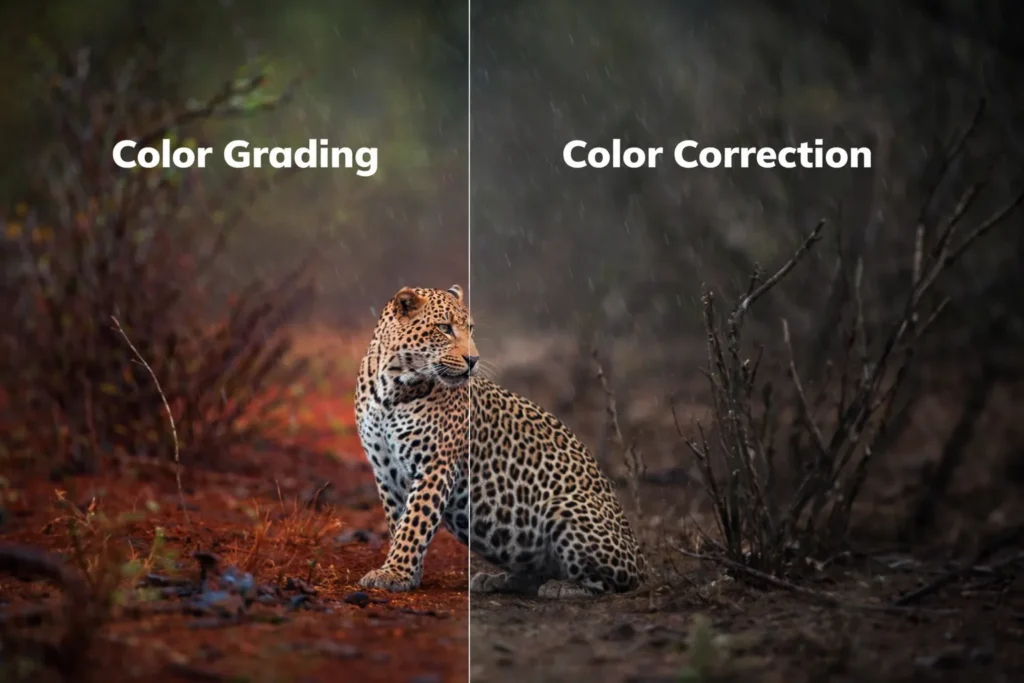
Need engaging YouTube videos that keep viewers watching? I edit with smooth transitions, captions, and clean color grading using Adobe Premiere Pro.
Includes:
- Jump cut editing
- Background music sync
- Subtitle captions
- 1080p export
Naming tools build credibility.
Data Entry / Virtual Assistant Gig
Before:
I will do data entry fast and accurately.
After:
Overwhelmed with spreadsheets or CRM updates? I provide accurate Excel and Google Sheets data entry with fast turnaround.
Services include:
- CRM data entry
- Lead generation research
- Product listing uploads
- Data cleanup and formatting
Specificity separates you from thousands of similar gigs.
What Are the Most Common Fiverr Gig Mistakes That Hurt Rankings and Conversions?
The most common Fiverr gig mistakes are a vague title, a description under 800 characters, ignoring the FAQ section, keyword stuffing, an ineffective hook, and editing the gig before gathering 30 days of performance data. Each one reduces ranking eligibility, buyer conversion, or both, and most can be fixed in under 30 minutes.
Here is what each mistake actually costs:
Vague title: “I will do writing” gives Fiverr’s algorithm nothing to match against a buyer’s search query. Without a specific keyword, the gig cannot rank for any targeted phrase. The fix is a title built around the exact phrase buyers type, placed as close to the beginning of the title as possible.
Description under 800 characters: Fewer characters mean fewer keyword signals. It also looks unfinished to buyers scanning the page. Both outcomes reduce impressions and conversion rate. The target range is 900–1,100 characters.
Ignoring the FAQ section: The FAQ section is an additional keyword-rich real estate section that most sellers leave empty. Adding three to five entries on common buyer questions expands search eligibility without touching the main description. It also pre-answers questions that would otherwise become messages, reducing pre-order friction and improving conversion rate.
Keyword stuffing: Repeating the same phrase five or six times in a 200-word description is detectable by Fiverr’s algorithm. Over-optimized gigs can be suppressed in search results. Natural variation across primary keywords, semantic variations, and long-tail phrases is more effective and more durable than raw repetition.
Generic hook: Opening with “Hi, I am [name] with five years of experience” puts the focus on the seller rather than the buyer’s problem. Buyers make decisions in seconds. If the first line does not address their need, attention is lost before the description is read. The hook formula is: buyer problem + clear solution.
Editing too often: Each time you change a title, tag, or description, Fiverr’s algorithm resets the data window it uses to evaluate performance. The system needs at least 30 days of stable data to assess click-through rate, conversion rate, and order completion accurately. Editing before that window closes traps the gig in a permanent low-impression cycle. The rule: optimize once, wait 30 days, then use analytics to identify the specific metric that needs adjustment.
Copying competitor descriptions: Duplicate content signals low quality and puts you in direct competition with an established gig using identical positioning. Your description is your differentiation. Borrowing structure is fine. Copying text is not.
When sellers treat these as one vague task called “gig optimization,” they apply changes randomly and cannot isolate what worked. Each mistake above has a specific metric that reveals it. Low impressions point to the title or tags. Low CTR points to the thumbnail or title. Low conversion rate points to the description.
For an integrated approach to client acquisition beyond the gig itself, the strategies in the getting your first Fiverr client guide pair directly with these optimization principles.
The Suppression Triggers: 7 Description Patterns Fiverr Quietly Penalizes
Most Fiverr sellers think suppression only happens when the algorithm flags obvious keyword stuffing. The reality is more uncomfortable. Fiverr’s 2026 algorithm runs pattern detection on descriptions, tags, and package configurations together, and it quietly demotes gigs that trip specific signals, without ever sending a notification.
These are the suppression triggers most help docs do not list. Each one is observable in real seller data and each one is fixable.
Trigger 1: The Duplicate Skeleton
Fiverr’s algorithm catches structural duplication even when the wording varies. A description that follows the exact same skeleton as 50 other gigs in your category (same hook line, same 4-bullet deliverables, same CTA position) reads as low-originality to the embedding model the platform uses.
The categories where this hits hardest: logo design, voice over, SEO content writing, video editing intros.
The fix is structural, not stylistic. Reframe deliverables as a process rather than a flat bulleted list. Open with the buyer outcome instead of the buyer problem if your category is saturated.
Trigger 2: Tag-Description Contradiction
When tags say “ecommerce SEO” but the word “ecommerce” never appears in the description, Fiverr’s relevance scoring drops the gig across all tagged terms. The mismatch tells the system the seller has tagged for searches they cannot actually serve.
This is the most common silent killer for sellers who copy tag strategies from competitors without rewriting their description to match.
The fix: every tag phrase should appear at least once inside the description body or FAQ, in a natural sentence.
Trigger 3: The Completion Math Leak
A description that promises “fast 24-hour turnaround” while the Basic package timer is set to 3 days creates a buyer confusion gap. Buyers message instead of ordering. Pre-order messages are a positive engagement signal in isolation, but a high message-to-order ratio is a negative conversion signal that suppresses the gig.
The fix: every speed, revision, and inclusion claim in the description must match the package configuration exactly. Read the description side-by-side with all three package tiers before publishing.
Trigger 4: Trust-Killer Generic Phrases
The phrases “100% satisfaction guaranteed,” “unlimited revisions,” and “best quality work” don’t just read as filler. They correlate with high cancellation rates because they attract a specific buyer profile: low-trust, high-demand, prone to disputes. Fiverr’s algorithm has learned this correlation over years of data.
Gigs using these phrases convert worse and cancel more, which compounds into ranking suppression.
The fix: replace generic guarantees with specific operational claims. “5 revisions included on Standard” outperforms “unlimited revisions” both as a conversion line and as an algorithm signal.
Trigger 5: The Third-Person Voice Pattern
Descriptions written entirely in third person (“This service provides…”, “The seller delivers…”) have measurably lower message-to-order conversion. Buyers cannot build trust with a faceless service. They build it with a person.
Fiverr’s algorithm reads engagement metrics, not voice directly, but the engagement gap is real enough to surface in rankings within 30 days.
The fix: rewrite in first person. “I deliver…” beats “This gig delivers…” across every category I have audited.
Trigger 6: Over-Edit Velocity
Editing a gig more than 2 times in any 30-day window resets the algorithm’s evaluation cycle each time. The system never gets enough stable data to score the gig accurately. Sellers who tweak weekly trap themselves in a permanent low-impression cycle.
The fix: edit once, wait 30 days, edit once more based on analytics, wait again. Two cycles per quarter is the practical ceiling.
Trigger 7: The Cancellation Echo
Every cancellation damages rankings, but the damage has a half-life of about 90 days. Sellers who pause their gig after a cancellation extend the damage window because the algorithm has no successful order data to overwrite the signal with.
The fix is counterintuitive: keep the gig active and keep delivering successful orders. The cancellation echo decays faster when the algorithm sees fresh positive data.
Quick Reference Table
| Trigger | What it looks like | What the algorithm reads | Fix |
|---|---|---|---|
| Duplicate skeleton | Same hook + same 4 bullets + same CTA as top 20 gigs | Low originality, replaceable seller | Reframe deliverables as a process |
| Tag-description mismatch | Tag: “ecommerce SEO” / Description: no “ecommerce” mention | Tagging not backed by content | Mirror every tag phrase in the body |
| Completion math leak | “24-hour delivery” in description, 3-day package timer | Buyer confusion → messages → cancellations | Match every claim to package config |
| Trust-killer phrases | “Unlimited revisions,” “100% satisfaction,” “best quality” | High cancellation correlation | Replace with specific operational claims |
| Third-person voice | “This service provides…” | Lower buyer trust, lower conversion | Rewrite in first person |
| Over-edit velocity | Title or description changed weekly | Algorithm cannot score, ranking frozen | 2 edits per 90 days maximum |
| Cancellation echo | Pausing the gig after a cancellation | No positive data to decay the signal | Keep gig active, deliver successful orders |
Most suppression is not about what you wrote. It is about what your writing signals about you as a seller before any work gets delivered. Audit your gig against these 7 triggers before assuming the description copy is the problem.
FAQ: Fiverr Gig Description and Character Limits (2026)
What is the Fiverr gig title character limit in 2026?
Fiverr allows up to 80 characters in a gig title. In practice, titles longer than 60–65 characters are truncated on gig cards, with the tail end replaced by an ellipsis. This means buyers scanning search results may never see the full title if it runs long. The practical recommendation for 2026 is to keep titles between 50 and 60 characters for full display, while using the 80-character ceiling only when a long-tail keyword phrase genuinely adds search value. For a full set of tested title examples by niche, the Fiverr gig title character limit guide covers character counts with display previews.
What is the Fiverr gig description character limit in 2026?
The Fiverr gig description limit is 1,200 characters, roughly 200–240 words. This cap applies to the main description field only. Package descriptions, FAQ entries, and the requirements section each have their own separate character limits. High-converting gigs in 2026 typically use 900–1,100 of the available 1,200 characters. Staying within this range uses most of the available space without padding with low-value content.
What happens if I don’t use most of the available characters?
A short description signals low effort to both Fiverr’s algorithm and buyers reviewing the page. Descriptions under 800 characters provide fewer keyword signals for ranking and fewer trust signals for conversion. Fiverr’s platform guidance indicates that gigs with minimal descriptions are less likely to surface in competitive search positions. The practical effect is fewer impressions, which means fewer opportunities, regardless of how strong the title and tags are.
Can I exceed the Fiverr character limit?
No. Fiverr’s fields enforce hard limits. Once you reach the character cap in any field, the platform stops accepting additional input. Each section has its own cap: the main description stops at 1,200 characters, package descriptions stop at approximately 500–800 characters per tier, and FAQ entries have their own per-entry limit. If a longer description feels necessary, the FAQ section is the right place to continue. It is indexed separately and adds keyword eligibility without touching the main description’s character count.
How should I optimize a Fiverr gig within the character limits?
The most effective approach is to allocate characters by function rather than writing until the space runs out. Use the first 100–150 characters for a problem-focused hook that includes the primary keyword. Use the next 80–120 for a specific credibility signal. Reserve 400–500 for a clear deliverables list using bullets. Weave secondary keywords throughout naturally. End with a one-line CTA of 60–80 characters. This structure covers ranking, persuasion, and engagement in sequence, without leaving characters wasted or content thin. For a complete walkthrough, the freelance proposal writing guide covers the same hook-credibility-deliverables structure used across platforms.
What is the ideal length for a Fiverr gig description?
The hard limit is 1,200 characters, around 200–240 words. The practical target for 2026 is 900–1,100 characters. That range fills most of the available space, sends a quality signal to the algorithm, and stays concise enough to hold buyer attention without demanding they scroll through padding. Leaving large sections blank reduces both impressions and perceived credibility.
How often should I update my Fiverr gig description?
After publishing or editing a gig, leave it unchanged for a minimum of 30 days. Fiverr’s algorithm requires a stable observation window to gather click-through rate, conversion rate, and order data before it can rank the gig accurately. Editing before that window closes resets the data baseline and traps the gig in a low-impression cycle. After 30 days, check Fiverr Analytics. If impressions are low, update the title or tags. If the conversion rate is low, revise the description hook or deliverables section. If performance is strong, change nothing.
Is it okay to use ChatGPT to write a Fiverr gig description?
Yes, but use it as a drafting tool, not a finished output. AI-generated descriptions are often generic, with vague hooks and no specificity to your actual niche or tools. Apply the five-part formula to any AI draft: sharpen the hook to address a real buyer problem, add one specific credibility claim, structure deliverables as bullets, embed keywords naturally, and end with a direct CTA. The result will perform far better than an unedited AI draft and better than a handwritten description that skips the structure.
Conclusion
Every Fiverr gig description has two jobs: rank and convert.
Ranking comes from smart keyword placement in your title and tags. Conversion comes from a structured description: hook, credibility, deliverables, keyword layer, and CTA.
The biggest mistake sellers make is constant tweaking.. Optimize once. Let it run for 30 days. Then analyze impressions, CTR, and conversion rate.
Apply this formula to one gig this week. Then monitor performance patiently. Pair this optimization with a structured client acquisition plan, like the strategies outlined in our guide on getting your first Fiverr client, and that is what separates sellers who wait for orders from sellers who build systems that generate them consistently.